Gage Management Software Benefits for Calibration & MSA

Most manufacturing and quality teams depend on accurate measuring instruments every day. Calipers, micrometers, gauges, scales, torque tools, pressure gauges, and other devices all need to be controlled, calibrated, maintained, and documented correctly.
When this information is managed with spreadsheets, paper forms, labels, or disconnected folders, the process can quickly become difficult to control. Calibration dates may be missed. Records may be duplicated. Reports may take too long to prepare. And when an audit arrives, teams may spend valuable time searching for evidence instead of focusing on quality.
That is where gage management software can make a major difference.
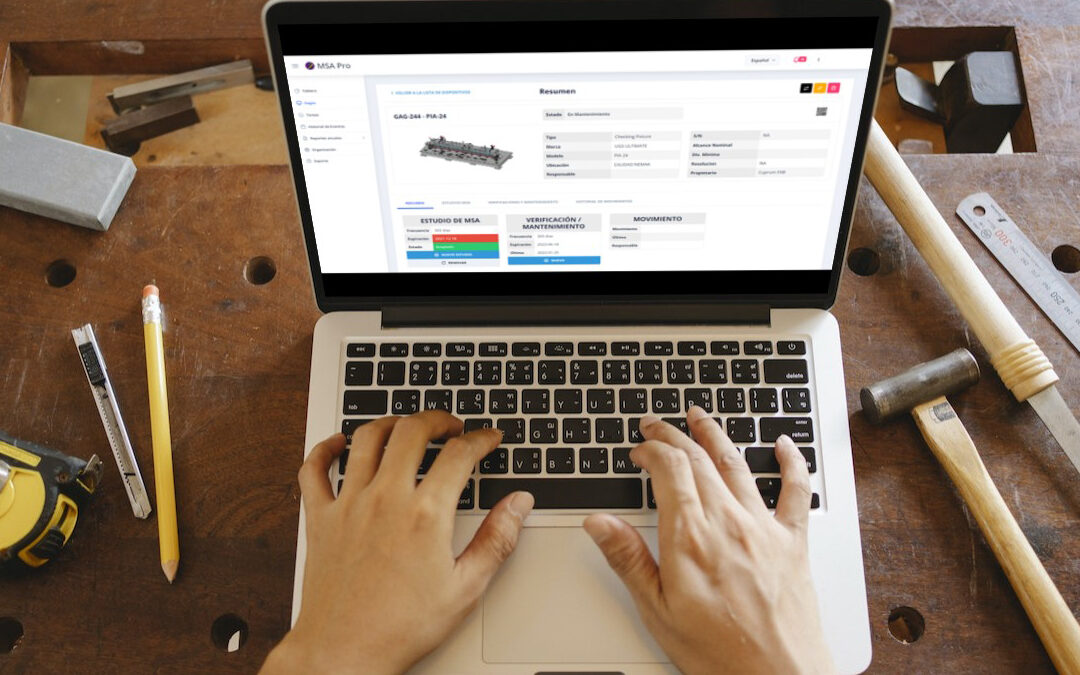
MSA Gage Pro helps companies keep gages, calibration events, maintenance tasks, reports, device history, and MSA studies organized in one cloud-based platform. Instead of relying on manual tracking, quality teams can see the status of their measuring instruments, upcoming tasks, and compliance records from one place.
Still managing gages with spreadsheets?
Start your free trial of MSA Gage Pro and see how simple calibration and MSA control can be.
What Is Gage Management Software?
Gage management software is a digital system used to manage measuring instruments, calibration records, maintenance schedules, device status, traceability, and reports.
For companies working under quality standards such as ISO 9001, IATF 16949, AS9100, FDA requirements, Six Sigma, or Lean Manufacturing, gage control is not just an administrative task. It is part of maintaining product quality, reducing risk, and proving that measurement systems are reliable.
A good gage management system helps answer important questions quickly:
Where is this instrument located?
Is it calibrated and ready to use?
When is the next calibration due?
Who is responsible for the next task?
What is the device history?
Are there MSA studies connected to this gage?
Can we produce reports for an audit?
When those answers are available in one place, quality teams can work with more confidence and less manual effort.
1. Centralized Gage and Device Records
One of the biggest benefits of gage management software is having a single place for all measuring instrument information.
Instead of keeping device records in multiple spreadsheets or folders, teams can maintain organized records for each gage, including status, location, calibration history, maintenance records, assigned users, supplier information, documents, and related studies.
This makes it easier to track every instrument throughout its lifecycle. Whether a device is active, due for calibration, out of service, under maintenance, or assigned to a supplier, the information is easier to find and manage.
For quality managers and calibration technicians, this reduces confusion and helps prevent outdated or duplicated records.
2. Fewer Missed Calibrations
Missed calibration dates can create serious problems. A device that is overdue may affect inspection results, production decisions, customer confidence, or audit performance.
With manual tracking, teams often depend on someone checking spreadsheets, calendars, labels, or emails. That creates risk, especially when the number of devices grows.
Gage management software helps teams stay ahead of calibration deadlines by making due dates and upcoming tasks easier to monitor. In MSA Gage Pro, teams can view calibration events, tasks due, and expiring devices from one platform, helping them act before issues become urgent.
This is especially valuable for companies managing a large number of measuring tools across different departments, locations, or production areas.
3. Less Time Spent on Administrative Work
Managing gages manually takes time. Someone has to update records, search for certificates, prepare reports, check due dates, contact users, and verify device history.
When this work is spread across paper documents and spreadsheets, simple questions can take too long to answer.
A gage management platform reduces administrative effort by keeping device information, calibration records, tasks, reports, and history connected. This allows quality teams to spend less time searching and more time improving the process.
The result is not only time savings. It also helps reduce dependence on one person who “knows where everything is.” When the system is organized, the process becomes easier for the whole team to follow.
4. Better Traceability
Traceability is essential in calibration and quality management. Teams need to know what happened to a device, when it happened, who was involved, and what evidence supports the record.
MSA Gage Pro helps companies maintain device history and traceability so information is easier to review when needed. This can include calibration activity, maintenance, status changes, incoming and outgoing equipment movement, supplier tracking, reports, and supporting documentation.
For audits, customer requirements, or internal investigations, traceability can help quality teams respond faster and with more confidence.
5. Improved Audit Readiness
Audits become more stressful when records are incomplete, outdated, or hard to find. A quality team may know that calibrations were performed, but if the evidence is scattered across folders or spreadsheets, proving compliance can still be difficult.
Gage management software helps teams keep calibration and maintenance records organized so they can prepare reports and demonstrate control more easily.
For organizations working with ISO 9001, IATF 16949, AS9100, FDA, or other quality requirements, this type of control supports better audit preparation. Instead of waiting until audit week to organize records, teams can maintain audit-ready information throughout the year.
Need to prepare for an audit?
MSA Gage Pro helps keep device records, calibration history, reports, and MSA studies accessible from one platform.
6. Support for MSA Studies and Gage R&R
Calibration control is important, but it is only one part of measurement reliability. Companies also need to understand whether their measurement systems are capable of producing reliable results.
Measurement System Analysis, or MSA, helps evaluate the precision, variation, and reliability of measurement systems. This may include Gage R&R, attribute studies, linearity, bias, stability, and other studies depending on the process and quality requirements.
MSA Gage Pro helps teams manage MSA studies together with gage records and calibration information. This is valuable because the device, its calibration status, and its measurement studies are all connected to product quality.
When MSA information is easier to organize and review, teams can make better decisions about measurement systems and continuous improvement.
7. Access from Any Device
Modern quality teams are not always sitting at the same desk. Gages may be on the production floor, in a lab, with a supplier, or in another department.
A cloud-based gage management system allows authorized users to access important information from a computer, tablet, or phone. This makes it easier to check device status, review calibration information, and keep work moving without relying on paper files or one local computer.
For teams that need flexibility, this is a major advantage over traditional spreadsheets or desktop-only systems.
Manual Tracking vs. MSA Gage Pro
Manual Tracking or Excel |
MSA Gage Pro |
| Records can become outdated or duplicated | Centralized gage and device records |
| Calibration dates are easy to miss | Better visibility into due dates and tasks |
| Reports take time to prepare | Calibration, maintenance, and MSA reports in one place |
| Traceability depends on folders and manual notes | Device history and status are easier to review |
| Files may live on one computer | Cloud access from any device |
| Audit preparation can be stressful | Organized records support audit readiness |
Who Benefits from Gage Management Software?
Gage management software is especially useful for manufacturing companies, quality departments, calibration teams, MSA laboratories, maintenance teams, and organizations that need to comply with customer or regulatory requirements.
It is also valuable for companies that are outgrowing spreadsheets. If your team is managing more devices, more calibration events, more suppliers, or more audits, manual systems usually become harder to control over time.
Take Control of Your Gage Management Process
Gage management software helps quality teams move away from manual tracking and toward a more organized, reliable, and audit-ready process.
With MSA Gage Pro, companies can manage gages, calibration events, maintenance tasks, reports, device history, traceability, and MSA studies from one cloud-based platform.
If your team is still using spreadsheets, paper records, or disconnected folders to manage measuring instruments, now is a good time to simplify the process.
Start Free Trial →
https://app.msagagepro.com/en/signup
Request a Demo →https://msagagepro.com/get-a-demo/

Written by Francisco Olano
More From This Category

How to Choose Gage Management Software for Calibration, Compliance, and MSA
Choosing the right gage management software is an important decision for any company that depends on accurate measuring instruments. Calipers, micrometers, gauges, scales, torque tools, pressure gauges, fixtures, and other measurement devices all need to be...
What Is Gage Management Software? Calibration, MSA & Compliance
What Is Gage Management Software? A Practical Guide for Calibration, Compliance, and MSAGage management softwareGage management software is a digital system used to control measuring instruments, calibration schedules, maintenance records, alerts, reports,...